birth

Not Broken Don't Bond It

Posted Wed, 01/25/2012 by michael

not broken

The point is maintaining relationship – not connecting something that is broken.

The terms bonding and attachment imply separation, to bond, connect, glue together separate parts. Life is relationship. We are never separate, except in our minds.

We are the light, the air, the water, the nutrients, the heat, the vibration, gravity, ever-changing movement and much more. The human body and brain is defined by the environment. Each mirrors the other. But we forget. The deeper reality and challenge is to prevent this ongoing, dynamic and reciprocal connection from being broken.

Joseph Chilton Pearce and I were exploring the root cause of our social and political calamity. Joe lamented that nature’s agenda during pregnancy, birth and the sensitive postnatal period – doesn’t happen. What could be fails to unfold. ‘Houston, we have a problem.’ See: http://ttfuture.org/files/2/members/esa_jcp_biology_culture.pdf

dna remembers

“The addict’s reliance on the drug to reawaken her dulled feelings is no adolescent caprice.
The dullness is itself the consequence of an emotional malfunction not of her making.”

Gabor Mate, MD, Author,
In the Realm of Hungry Ghosts, Close Encounters with Addiction

More on Pleasure, Pain and the Developing Brain

The development of each new human being involves the complete evolutionary process of life on the planet. Native traditions recognize and honor this fact. Western civilization, driven by an anti-feminine passion for male intellect does not, thus the classic mind-body split. One self-world view nurtures the deep ecology that we are, the other attempts to dominate and control nature, including our own.

In each of us is the entire process of creation, what Joseph Chilton Pearce calls Evolution’s End. Each stage of development anticipates the past and creates the necessary foundation for the next unknowable leap forward to unfold. The developing fetus in the liquid world of the womb, for example, has no use for lungs and yet creates lungs anticipating an oxygenated environment it ‘knows’ nothing about. The entire spectrum of human development implies this unfolding anticipation and unknowable expectation.

bonding

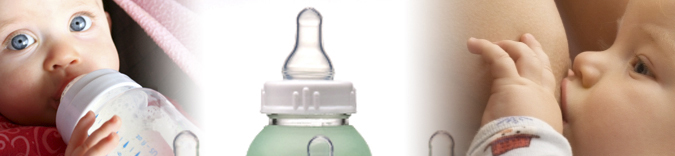
What is bonding, the very heart of species survival or a nice sentiment? Are the experiences we call bonding or attachment the same today as 100 years ago, before commercial interests made it shameful to breastfeed, fetal monitors and surgical-cesarean births? What is the relationship between nurturing and bonding? Do stronger bonds result in greater nurturing? Is reduced bonding a prescription for generational cycles of neglect and abuse? Critical questions are being raised by visionaries in the field of human development. What are the consequences of interfering with bonding and nature’s expectation for nurturing?

 jcp_collected works

In the spring of 2010 a small group, including the editor of Joe’s latest book and David B. Chamberlain, PhD, a leader in the field of prenatal intelligence and memory, gathered in Ojai California to explore with Joseph Chilton Pearce his Collected Works.

Throughout his life Joe shunned speaking about himself. For the first time, with this close group, Joe explored what was happening in his life and life around him as he wrote each of his major publications beginning with Crack in the Cosmic Egg.

Let’s say we have this wonderful mom and she’s nurtured and feels safe during pregnancy.  She had a rather ideal experience inutero but then the nurturing environment collapsed after birth.

This has a tremendous impact on the fourth neural structure in the human being, which is the pre-frontal cortices right behind our forehead.  That’s the largest part of the whole brain.  Larger than any other structure.  But this grows, not inutereo where the fore-brain, what we think of as the ordinary fore-brain and hind-brain grew, which is determined by the mother’s emotional state, but the growth of the pre-frontal cortices, which is what makes us unique humans over all the other mammal species, the pre-frontal cortices grow primarily after birth because otherwise the head would be so huge you’d have real troubles with birth.

Bonding and the Brain continued

Posted Sun, 09/05/2010 by Pearcej

The term bonding assumes that two things are being connected. The mother-child is a shared, reciprocal unit. The question is maintaining the connection that is there throughout the entire nine months of gestation.  That bond is simply that the other is the actually and only environment for the growing fetus and infant.  To refer to that as a bond might strike you as strange but that’s what it is.  It’s a bond between the new life and the environment which gives rise to it, and that’s the mother. 

Suzann Arms of Birthing the Future is planning an international symposium on birth and how it affects the way the brain and therefore how culture develops. She asked for feedback – Though you might be interested…

Suzann 
It is done onto us as we perceive – as we believe – as we do onto others.

The emphasis you placed on birth – being the foundation of human development – is of course critical. I suggest that there is another focus, one that is deeper and more nurturing. The core insight driving all of our activities at Touch the Future is summarized in the preface for a new book in development Kids are NOT the Problem.

There is a pervasive, near universal perception – parenting is about kids. Just about everything a parent does and often thinks about is about ‘the kid.’ An alternative point of view, a completely different paradigm, is that kids provide the necessary catalyst for evolutionary development in adults. The first, parenting is about kids, places children, their care, education and development in the spotlight. They are the goal and focus of attention and resources. The second, becoming a parent is about adult development with kids providing the stimulus for this continuing growth, places the adult center stage. Adult growth and development then becomes the goal, focus of attention and target for resource investments. It sounds selfish but it’s NOT.

Syndicate content